A place can hold the trace of a story; a voice, the memory of a place. In Timbi-Madina, local sources and written research bring these memories into conversation with land and knowledge. Reading them together means welcoming what has been passed on while keeping unanswered questions visible.
Local accounts are attributed to their sources; present-day practices remain to be documented through fieldwork.
Places of memory
Names and places with which the sources associate stories.
Transmission
Voices and writing, read in their context.
Knowledge
Farming practices rooted in the history of the land.
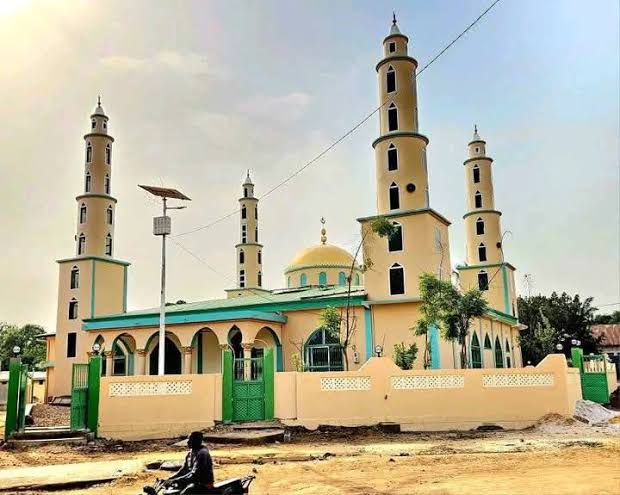
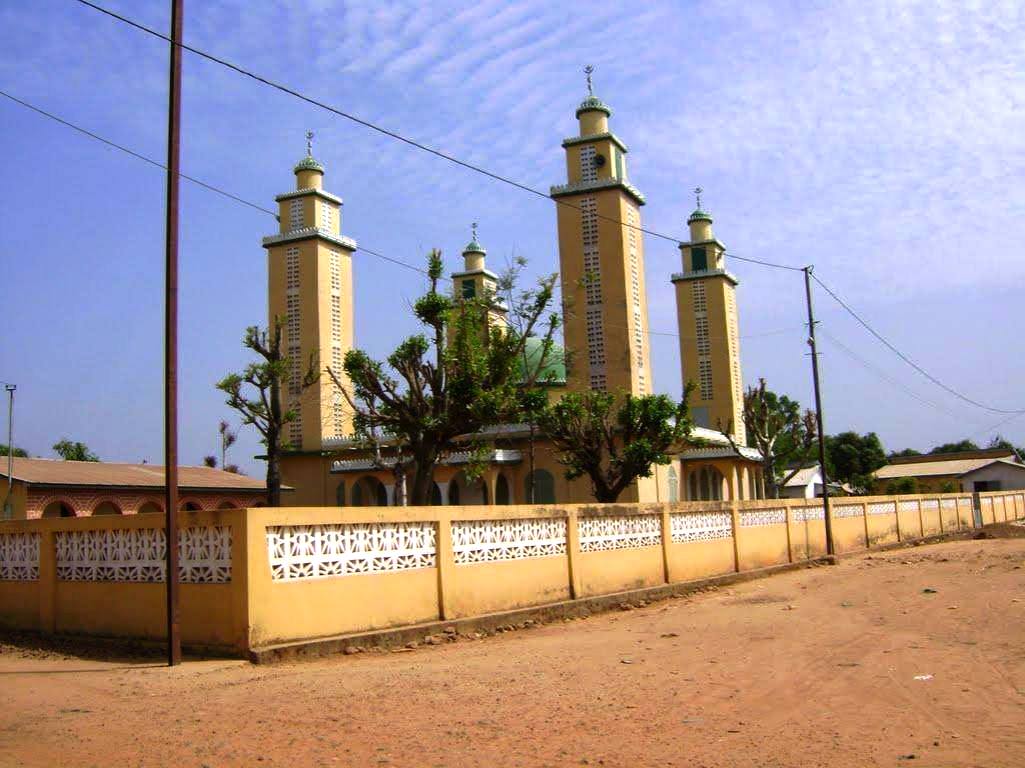
The mosques of Timbi-Madina Centre
Two views of the mosques in the centre, identified by the project owner. These photographs are separate from the historical places discussed below.
Mosque in Timbi-Madina CentreFacade and minarets of one of the two mosques in Timbi-Madina Centre.Another mosque in the centreThe other mosque in Timbi-Madina Centre, viewed from the street.
01 · Places of memory
Places that hold stories
Three ways into local memory. The sources tell stories about places; they do not establish their present condition.
An author’s account
Madina-Tokosséré
In Histoire du Fouta Djallon, El Hadj Maladho Diallo recounts El Hadj Oumar Tall’s stay in Madina-Tokosséré around the mid-nineteenth century. He records the local memory of a dwelling and a palm tree associated with that visit. Their present condition has not been verified.
Local sources associate Timbi-Diari, in the Tyapata area, with a longstanding religious tradition and a mosque that features in accounts of the Timbi region. The site’s precise history and chronology remain to be verified.
Tyapata holds a particular place in accounts of Timbi-Madina. Local sources describe links with former chiefs’ residences and several communities associated with religious learning.
Timbi-Madina’s past has also been passed down through elders’ accounts, genealogies and teaching. In the introduction to his book, El Hadj Maladho Diallo describes listening to chroniclers and custodians of local memory. Such testimony is valuable and should be contextualized alongside other records.
In the account of Tyapata, the sources place Thierno Ibrahima N’Dàma’s Quranic studies in Nialy in the 1840s. This point of local memory does not describe teaching today.
Cultivated land forms part of Timbi-Madina’s everyday heritage. Local sources mention potatoes, fonio, maize and market-garden crops. Beyond the harvests, the landscape reflects agricultural knowledge passed down and reshaped across generations.
M. Diop’s study of the Timbi-Madina plain, published by FAO in 2001, examines changes in relationships between land, farming and livestock keeping. The regional study held by IRD explores connections between farming and the passing on of land rights. These readings place practices in their historical context rather than providing an inventory of present-day customs.
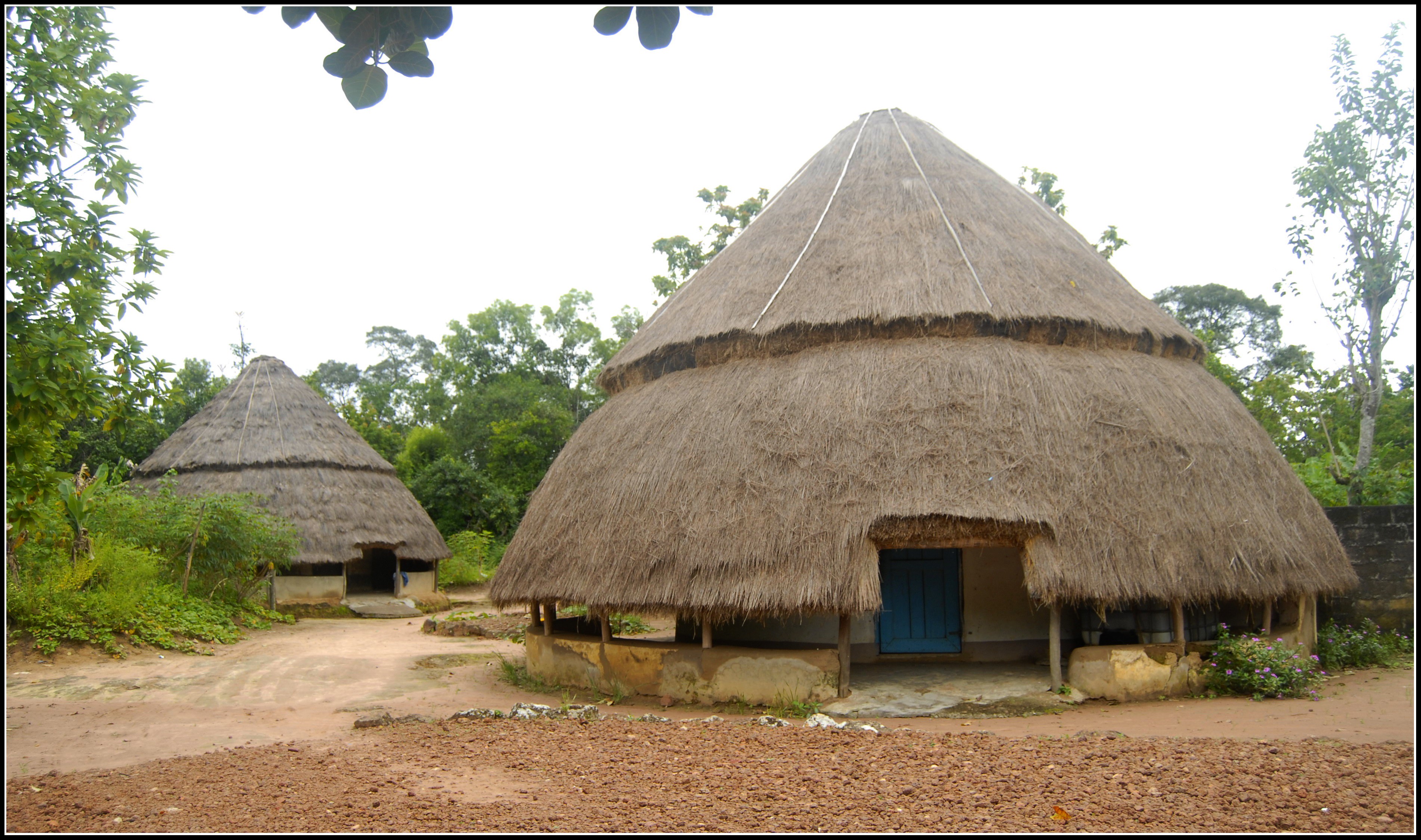
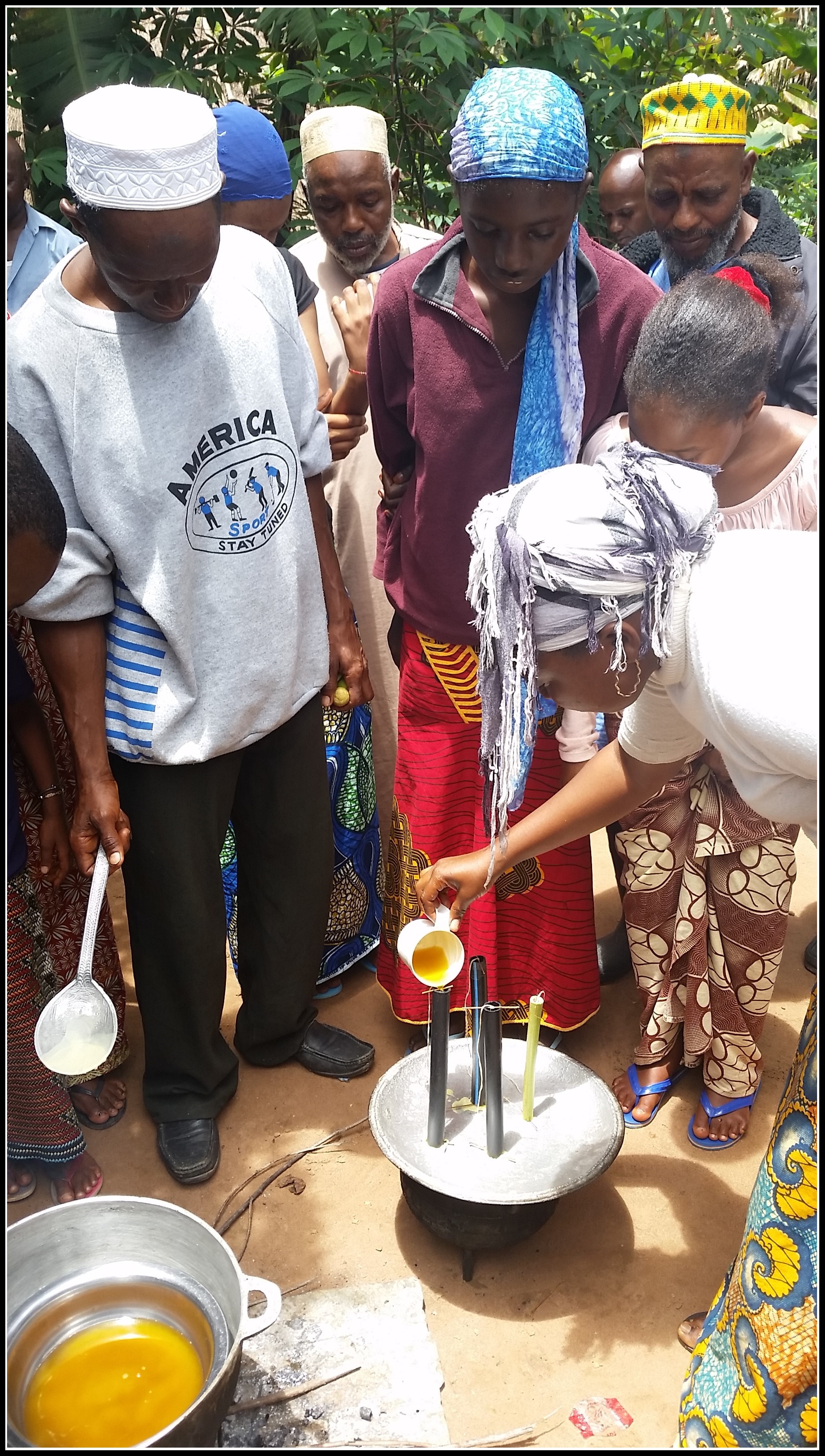
Two photographic views from 2015 near Timbi-Madina: homes and a candle-making workshop. Each caption retains the image’s context and the limits of its location information.
Homes in the surrounding area29 August 2015 · Near Timbi-Madina, according to the location published on Flickr. The village name has not been established.Kris Fricke · g_AK30762bPhotograph source · CC BY-NC-ND 2.0A candle-making workshop8 September 2015 · Near Timbi-Madina, according to the Flickr location. Workshop identified by the photographer; this image does not describe a current activity.Kris Fricke · i20150908_120755bPhotograph source · CC BY-NC-ND 2.0
04 · Natural heritage
Landscapes worth preserving
The plains, cultivated land and vegetation form the landscape described in the Timbi-Madina sources. A heritage perspective connects these places with farming practices and local accounts, without implying that these areas have official protected status.
A typographic evocation of the landscape · Not a map
A name preserved in the sources
Soumaa
The sources mention the Soumaa waterfall. Its precise location, access conditions and present state are not documented here. This mention preserves a place name; it does not provide visitor information.
Memory recorded in the local sources, whose date and context remain to be clarified.
Oral tradition
An account passed down and recorded by an author; its existence alone does not establish every detail.
Documentary study
An analysis rooted in a period and geographical scope, to be distinguished from present-day practices.
[N-01]
Sources sur Timbi Madina
Undated local sources supplied by the project owner. Sections used: History of the Tyapata district, Geography, Agriculture, Economy and Tourism. Accounts are attributed; the original remains private.
[L-01]
El Hadj Maladho Diallo — Histoire du Fouta Djallon
M. Diop — Mutations patrimoniales ou individualisation « imparfaite » des droits fonciers dans la plaine de Timbi-Madina
M. Diop, FAO, Réforme agraire / Land Reform, 2001/2. Research on the Timbi-Madina plain, land relations and agropastoral change. A study rooted in its period, not generalized to present-day customs.
Le régime foncier dans la région des Timbi (Fouta-Dialon)
A regional study held in IRD’s public archives. Chapter II: the passing on of land ownership and the organisation of farming. It concerns the Timbi region, which is distinct from the present-day sub-prefecture alone.