Account 1
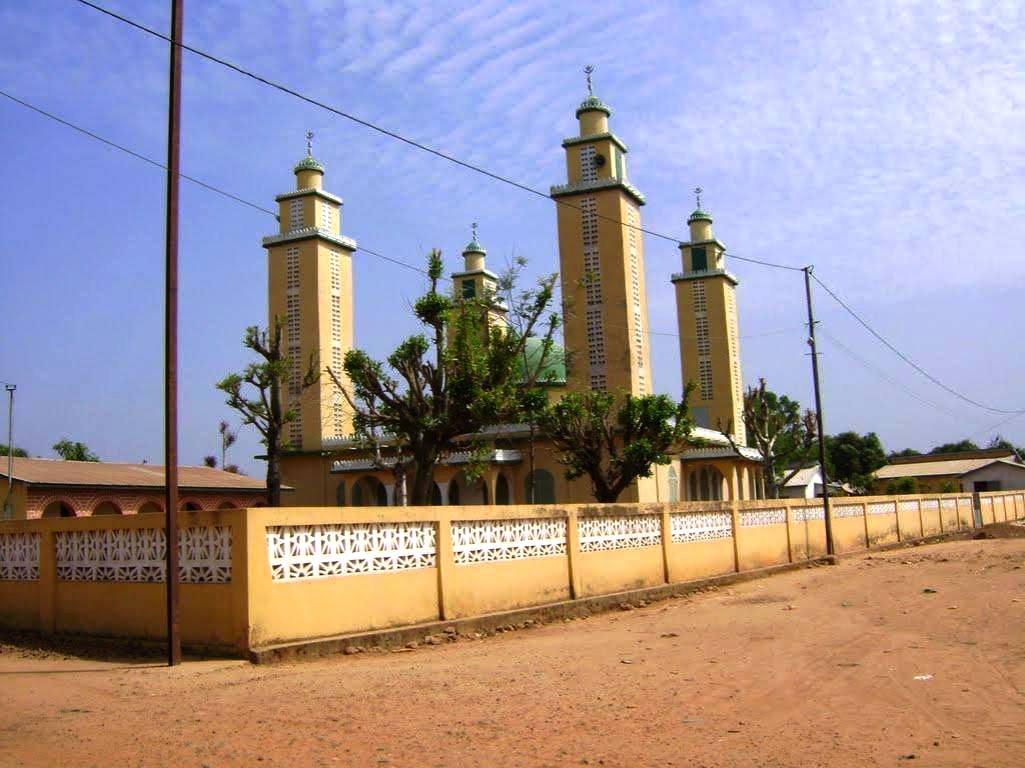
In one tradition, “Timbi” refers to the historic diwal and “Madina” is associated with Medina, an important city in the Muslim tradition.
HISTORY & MEMORY
From early settlement to modern transformations, explore the stories and events that have shaped Timbi-Madina.
Explore the timelineAccounts · Sources · Transmission
Timbi-Madina's history is part of the wider story of the Fouta-Djalon highlands. The area experienced different forms of organization, from communities and farming traditions to local chiefdoms and colonial and modern administrations. The accounts presented here draw on local sources, historical research and studies of the Timbi region.
The larger diwal of Timbi, the diwal of Timbi-Madina, the Timbi region and the present-day sub-prefecture refer to different territories. The Fouta-Djalon provides their regional context.
01 · HISTORY & MEMORY
Land-tenure studies situate the Timbi region within a long history of settlement, cultivation and livestock farming predating the organisation of the diwals. This regional reconstruction does not establish a documented founding date for Timbi-Madina.
In one tradition, “Timbi” refers to the historic diwal and “Madina” is associated with Medina, an important city in the Muslim tradition.
Another tradition also connects “Timbi” to the diwal, but relates the second part of the name to the Pular expression “Maa diina”, interpreted in the sources as an obligation towards religion.
These two etymological traditions are reported in the sources; they are not presented as proven linguistic findings.
In the 18th century, the Fouta’s political and religious organisation changed through warfare, conversions and the reorganisation of power. El Hadj Maladho Diallo describes a meeting at Timbi in 1734 and the formation of nine provinces, including Timbi. This historic Timbi should not be conflated with today’s Timbi-Madina sub-prefecture.
The author then describes subdivisions of the larger Timbi territory, among which Timbi-Madina emerged as a separate province. The passage establishes a territorial connection without providing a single year for the creation of its diwal. Institutions also rested on lineage hierarchies, unequal statuses and slavery, dimensions that form part of this history.
Local sources place Timbi-Madina’s connection to the diwal of Timbi around 1725. This transmitted date should neither be confused with the 1734 meeting described in the book nor become an official founding date. Former provinces, their subdivisions and the districts recorded today belong to different historical periods.
02 · HISTORY & MEMORY
Periods and caveats are retained. Each entry presents what its sources report, without claiming independent corroboration.
6 of 21 entries
Before the 18th century
Regional contextThe Timbi plain has a long history of successive settlement, food cultivation and pastoral practices. Land-tenure studies shed light on these changes but do not establish a founding date for Timbi-Madina.
Date precision : Broad period
Attributed regional context; no local founding date established.
Around 1725, according to local sources
Local sources place Timbi-Madina within the historic diwal of Timbi, whose later subdivisions formed several territorial entities. This is not a confirmed official founding date.
Date precision : Approximate, according to local sources
According to local sources; not an official founding year.
1727–1728 according to L-01
Regional contextEl Hadj Maladho Diallo dates the Battle of Talansan to 1727–1728 and describes it as a pivotal episode in the Fouta-Djalon's military and religious expansion. This is regional context, not a battle located in Timbi-Madina.
Date precision : Year range according to the author
Talansan is dated to 1725 in the Tyapata sources, and to 1727–1728 by the book. Both versions are retained.
1734 according to L-01
Regional contextEl Hadj Maladho Diallo describes a meeting of religious leaders held in Timbi in 1734 to organize the institutions of the Fouta confederation. Historic Timbi should not be conflated with present-day Timbi-Madina.
Date precision : Year cited in the book
Historic Timbi is not present-day Timbi-Madina.
18th century and subsequent subdivisions
The book describes an organization of nine provinces followed by successive divisions of the larger Timbi territory. Timbi-Madina emerged among the later provinces. The passage does not establish an exact year of creation.
Date precision : Exact year not established
No single creation year can be inferred from this passage.
Around 1848 (context of the stay)
According to El Hadj Maladho Diallo, El Hadj Oumar Tall stayed in Madina-Tokosséré before moving to Dinguiraye in 1848. The author also records local memories of a dwelling and a palm tree associated with his stay; their present condition is unverified.
Date precision : Approximate
Attributed account; the present condition of the remembered sites is unverified.
03 · HISTORY & MEMORY
Accounts of chiefdoms connect lineages, the exercise of power and the occupation of land. El Hadj Maladho Diallo records traditions concerning the Timbobhé and their ties to Timbi-Madina. These lineages illuminate a memory of leadership, but their transmission alone does not establish a verified genealogy. Land-tenure studies of the Timbi region also provide a way to examine relationships between kinship, land and local authority.
The local sources preserve a list of 34 villages in the former canton. This undated survey belongs to a historical organisation distinct from the 14 districts and 49 sectors recorded elsewhere in the sources. The names below retain the original spellings: they form neither a map of historical boundaries nor a set of already published village profiles.
An undated historical list transcribed from the sources, with spellings retained. It is distinct from the 14 present-day districts.
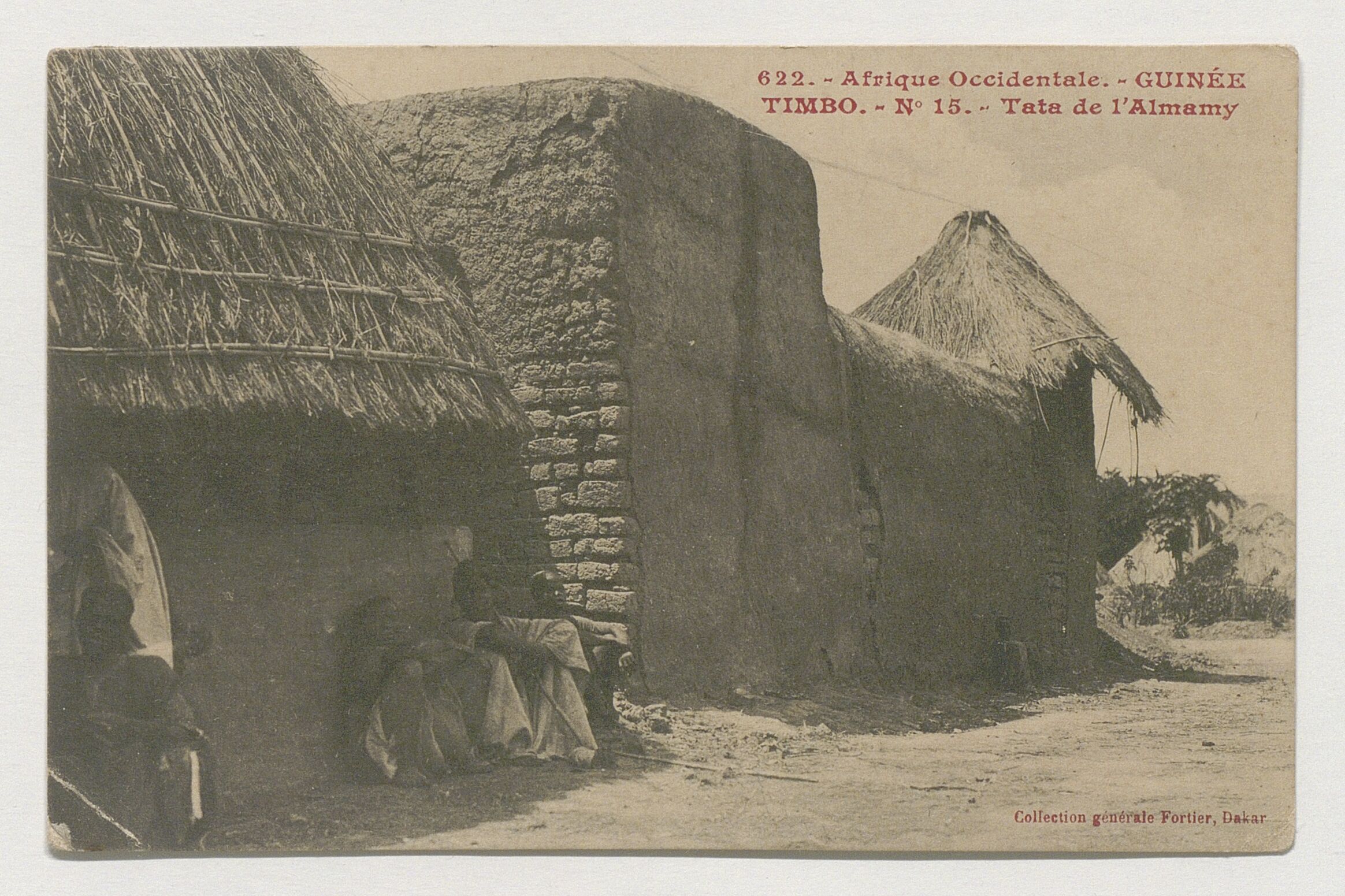
In an episode placed around 1848, El Hadj Maladho Diallo recounts that El Hadj Oumar Tall stayed in Madina-Tokosséré, within the diwal of Timbi-Madina, after a stay in Satina. The book then describes his departure towards Dinguiraye in 1848. The dating of the stay remains approximate and should not be turned into a definitively established day or year of arrival.
The author also records memories of a dwelling and a palm tree associated with the stay. These descriptions concern the sites as discussed at the time the book was written. They convey local memory, without establishing the present existence or condition of these heritage features. Field documentation would be needed before presenting them today in an illustrated account.
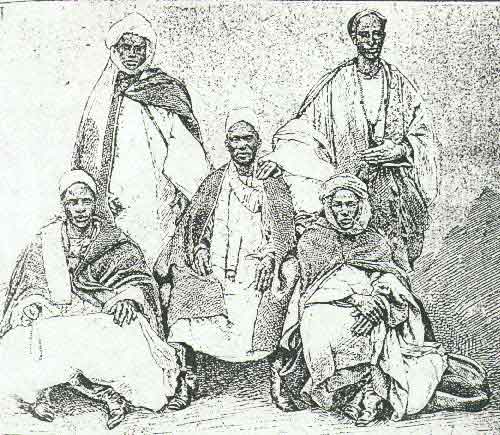
According to El Hadj Maladho Diallo, a dissident movement led by Thierno Iliassa of Ninguélandé emerged around 1856 within the diwal of Timbi-Madina. The author connects the conflict to succession rivalries, challenges to chiefly authority and an inheritance dispute transmitted through chronicles. Religious and political issues were therefore intertwined with relations between lineages and provincial authorities.
The same book recounts Alpha Mamadou Diouhé’s death around 1858, Alpha Diao Tokosso’s response and fighting in 1860 in which Thierno Iliassa was killed. These conflicts affected Timbi-Madina and surrounding areas. The account retains the reported violence, while neither legendary explanations nor the narrator’s moral judgments are adopted as the website’s voice. This is an author’s account to be read in its documentary context.
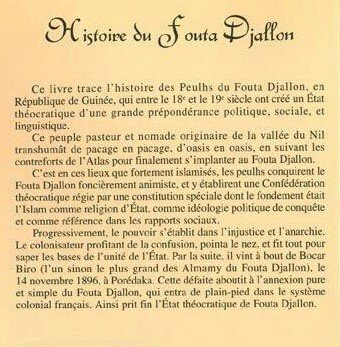
Local sources date Bocar Biro’s defeat at Porédaka to 14 November 1896 and mention an agreement on 6 February 1897. They also recount Alpha Abdoulaye’s opposition to taxation and forced labour in 1906, followed by his replacement in 1907. These dates and episodes remain attributed to the sources: the agreement’s status and the details of the canton dispute require archival comparison. Quinquaud’s 1938 article, written from a colonial perspective, provides contextual material to read critically, without automatically corroborating these local episodes.
Local history can also be read through education and infrastructure. The sources record the first French school in 1929, the administrative post in 1958, reorganisation as a section and Ninguélandé’s separation in 1965, then a power station at Bamikouré in 1971. They date the Timbi agricultural project to 1987, SOTELGUI’s arrival to 1996 and the Madina-Centre water supply to 2000. Contemporary records are still needed to clarify the terminology and scope of each change; these milestones should not obscure earlier forms of teaching and collective life.
Timbi land-tenure studies place food crops, including fonio and rice, and livestock practices within a history of land occupation. They examine relationships between land use, kinship and access to land: a history of knowledge as well as social relations.
M. Diop’s analysis places the rise of potatoes and commercial crops within colonial and postcolonial land-tenure changes. The sources mention an agricultural project in 1987; the study provides context without independently confirming that date. Administrative divisions and statistics from different periods are not merged.
04 · HISTORY & MEMORY
The sources reflect different perspectives and periods. Traditions, interpretations and uncertain dates are identified as such. Book references use printed page numbers; the individually licensed PDF remains private.
Undated local historical sources. An editorial reference document, not reproduced in full.
Return to the timelineL’Harmattan, © 2001. Printed pages used: 15–16, 23–25, 30–32, 35–41, 53, 59–62 and 86. Individually licensed copy; no public access to the PDF.
FAO, Réforme agraire / Land Reform, 2001/2. An analysis of land-tenure and agropastoral change; the study’s division into 10 districts is distinct from the 14 districts in the local sources.
Read the study on the FAO website Return to the timelineA 96-page study digitised in the IRD documentary collection. Regional research on land, kinship and villages; it does not by itself establish present-day boundaries.
Read the PDF study in the IRD archives Return to the timelineRevue d’histoire des colonies, 1938, available on Persée. An archive written from a colonial perspective: its terminology, judgments and interpretations must be attributed to its author.
Read the 1938 article on Persée Return to the timelineThese additions summarise the editions available on WebFuuta and identify their authors. Colonial categories and judgments belong to those authors; they do not define present-day families. Name variants remain open to local review.
[WF-01] Paul Marty — L’Islam en Guinée : Fouta-Djallon (1921), chapitre V
Family groups at the start of the chapter; province of Timbi-Médina; “Les talibés de Tierno Dayeejo”.
Read on WebFuuta ↗[WF-02] Paul Marty — L’Islam en Guinée : Fouta-Djallon (1921), chapitre I
“Origines et Islamisation”; passage on the almamy’s delegates and the family of Bayassi.
Read on WebFuuta ↗[WF-03] Thierno Mamadou Bah — Histoire du Fouta-Djallon (1999), chapitre III
La conquête du Fouta-Djallon par les Peuls: passage on the Diallo-Diâloɓe.
Read on WebFuuta ↗[WF-04] Thierno Mamadou Bah — Histoire du Fouta-Djallon, tome 2 (2003)
“Dans les autres parties du Fouta”: table, cercle of Pita, Timbi Madina row. The row gives no dates of tenure.
Read on WebFuuta ↗[WF-05] Tierno Mamadou Bah — Histoire du Fouta-Djallon (1999), chapitre VI
Portrait des Chefs de la Djihad: “Tierno Souleymane de Timbi-Touni”, account of Alfa Diâwo Diallo.
Read on WebFuuta ↗[WF-06] Paul Marty — L’Islam en Guinée : Fouta-Djallon (1921), chapitre X
§ 17 “Onomastique”: tradition of Alfa Yéro and the earth from Medina.
Read on WebFuuta ↗[WF-07] Thierno Mamadou Bah — Histoire du Fouta-Djallon (1999), 3e partie, chapitre I
“Le deuxième congrès du Fouta-Djallon à Timbi-Touni” (1743): passage on Thierno Ciré and the diiwal of Timbi-Madina.
Read on WebFuuta ↗[WF-08] Thierno Diallo — Les institutions politiques du Fouta-Djallon au XIXe siècle, 3e partie, chapitre VII
Refusal by the chiefs of Timbi-Madiina, Maasi and Bomboli; war with Timbi-Tunni; sub-provinces without official recognition.
Read on WebFuuta ↗[WF-09] Thierno Diallo — Les institutions politiques du Fouta-Djallon au XIXe siècle, 3e partie, chapitre X
Permanent Council of Timbo: two lists of members; the Baayasiiɓe family; representation of Timbi-Madiina.
Read on WebFuuta ↗[WF-10] Thierno Mamadou Bah — Histoire du Fouta-Djallon (1999), 3e partie, chapitre XII
Revolt of Iliassou, a notable of Nînguélandé (Timbi-Madîna), and intervention by Labé.
Read on WebFuuta ↗[WF-11] Thierno Diallo — Les institutions politiques du Fouta-Djallon au XIXe siècle, 1re partie, chapitre II
Internal revolts: Iliyaasu in Timbi Madiina; appeal to the chief of Labé.
Read on WebFuuta ↗[WF-12] Alfâ Ibrâhîm Sow — Chroniques et récits du Foûta Djalon, chronologie
Entry 1273 AH / 1856: revolt of Iliâçou Nenguélandé “in the Timbi-Tounni then in the Kinsi”.
Read on WebFuuta ↗[WF-13] Thierno Mamadou Bah — Histoire du Fouta-Djallon, tome 2 (2003), 3e partie, chapitre IV
Order of 5 March 1902: cercle of Timbi placed under Conakry, seat at Koussi; later formation of the cercle of Pita.
Read on WebFuuta ↗Continue with Timbi-Madina’s geography and district directory.
Discover Timbi-Madina